Via Ferrata – What is it?
What is a via ferrata?
A via ferrata, also called a climbing route through rocky terrain, is secured with steel cables, ladders, and other fixed installations. It allows mountaineers to tackle challenging routes normally accessible only to experienced climbers and provides additional safety through the permanently installed aids.
Our via ferratas in the Allgäu offer you an exciting adventure in the mountains that requires both physical fitness and mental strength. To master these challenging routes safely and successfully, it is important to be well prepared. The following tips will tell you what to look for when climbing a via ferrata – from the right equipment and optimal technique to planning and mental preparation. This way, you can enjoy the beauty of the mountains to the fullest – while staying safe!
Proper equipment – essential for via ferrata climbing
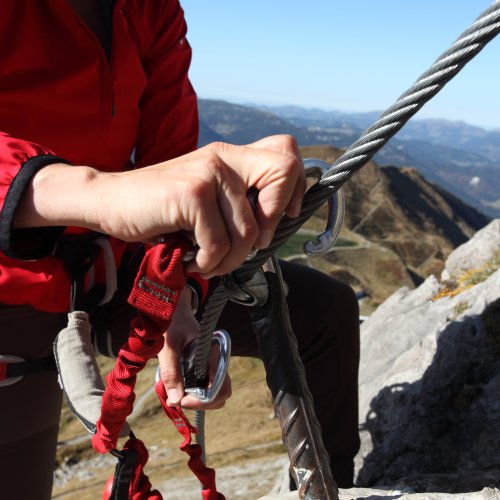
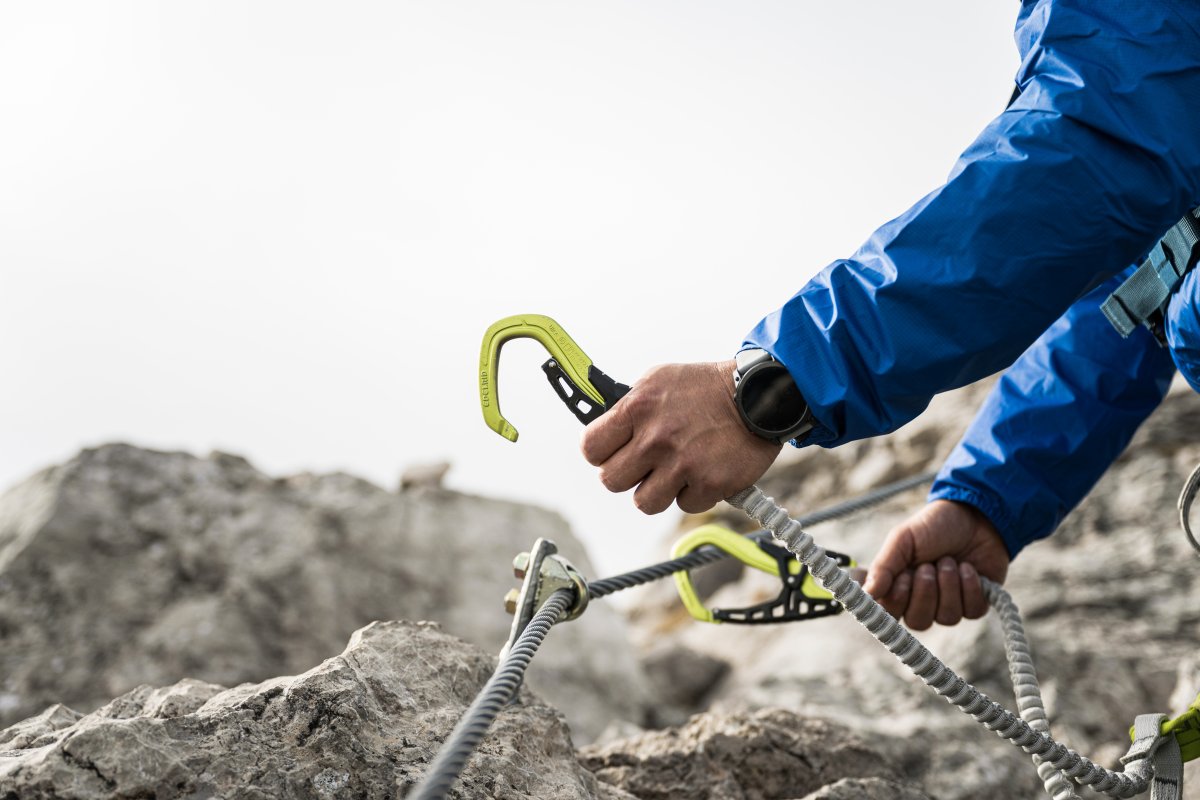
- Via Ferrata Set: You secure yourself to the steel cables with a via ferrata set. At each anchor point, the first of the two safety carabiners is unhooked and re-hooked behind it. This is followed by the second carabiner, ensuring the safety chain is never interrupted. The set consists of a special Y-shaped energy absorber, two carabiners with palm restraints, and a lanyard that attaches to the climbing harness. The energy absorber ensures that a potential fall is cushioned and the impact forces are reduced.
- Climbing Harness: The climbing harness is the heart of your equipment. It must fit perfectly and be comfortable, as you will be wearing it for extended periods. Make sure to check it regularly for wear.
- Helmet: A helmet is essential to protect you from falling rocks and possible head injuries in the event of a fall. Make sure the helmet fits well and is comfortable to wear.
- Gloves: Gloves protect your hands from abrasion and provide a better grip on wire ropes and ladders. Special via ferrata gloves are padded yet thin enough to maintain good feel.
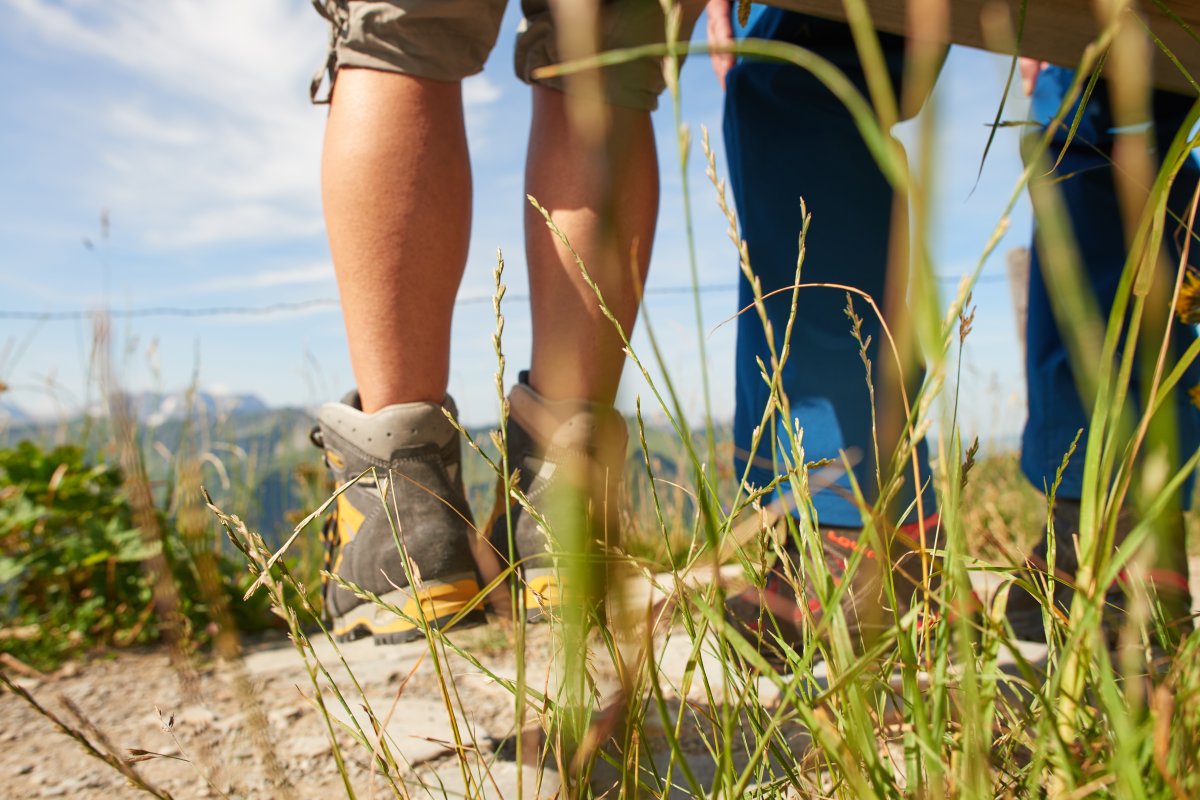
- Hiking boots: Sturdy, ankle-high hiking boots with a grippy sole are ideal, as they provide good grip and surefootedness on the often narrow and slippery ledges.
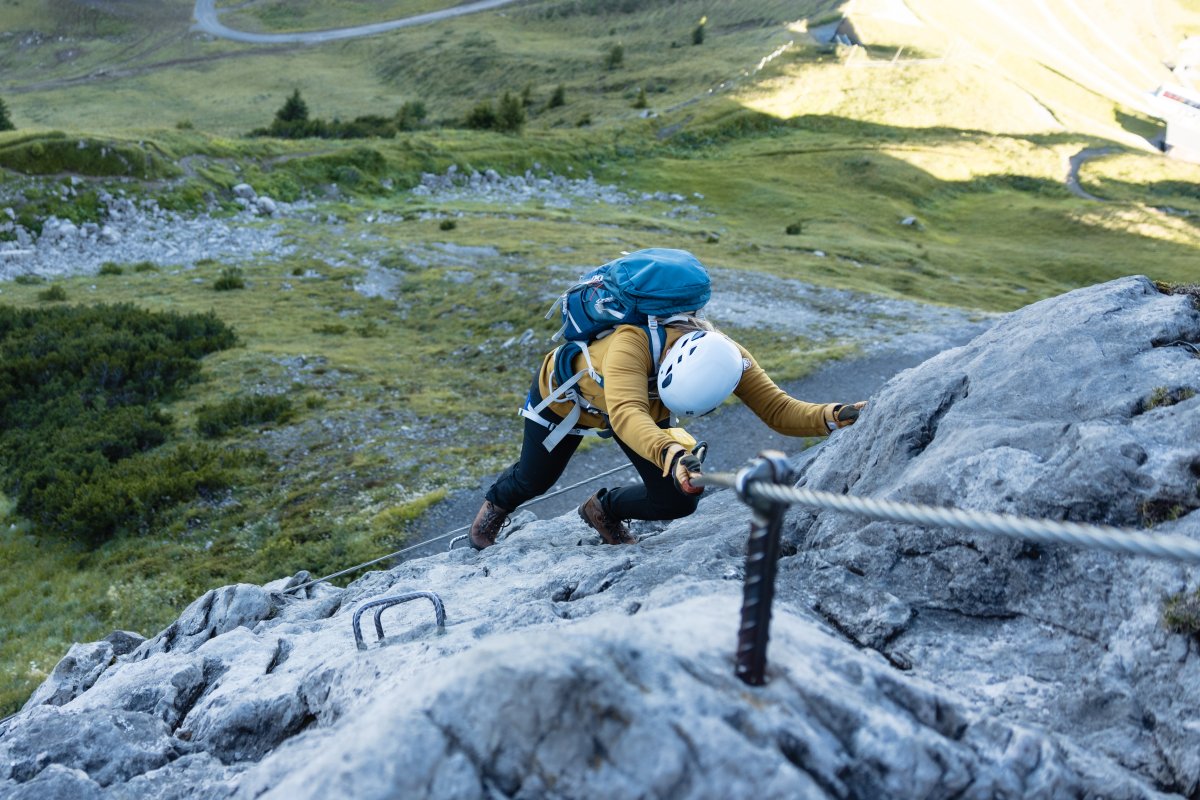
For optimal safety on the via ferrata: Correct technique
- Three-point technique: This via ferrata technique states that three of four points (two hands, two feet) should always be in contact with the rock. This ensures stable footing and reduces the risk of losing balance.
- Efficient climbing: Use the strength of your legs, not just your arms. Your legs are stronger and tire less quickly. Make sure to put as little strain on your arms as possible by using them only for stabilization and not for pulling yourself up.
- Calm & controlled movements: Avoid hectic and rash movements. Climb calmly and plan each step. Pause regularly to check your surroundings and ensure your carabiners are always securely clipped.
- Do not take two steps at a time on ladders and clamps.
- Climb with your face to the rock and take small steps.
- Your body should be upright (do not lean forward or backward).
- Hold holds and clamps at eye level to maintain maximum stability.
- Only one person should climb between two fixed points on a wire rope at a time.
- Always check wire ropes, clamps, holds, and footholds for strength and durability (e.g., by shaking and pulling).
Dealing with fear of heights & mental training for via ferrata climbing
- Choose a route that suits your ability and experience: Don't overestimate yourself and start with easier routes, such as the "Klettersteig an der Kanzelwand," to get a feel for the challenges and altitude. Also consider the length of the route and the required fitness level. For challenging routes such as the "Zwei-Länder-Sportklettersteig," it's a good idea to find out more about the route in advance and, if necessary, consult with experienced climbers or guides.
- Focus on your breathing: Deep, calm breathing helps you maintain control and avoid panic. Try to focus on the next step or hold, rather than the depths below.
- Confidence in your equipment and abilities is important. Practice regularly and climb via ferratas accompanied by experienced climbers or mountain guides to benefit from their advice and peace of mind.
When & how to go via ferrata: More tips on season, weather, etc.
- Right time of year: Experience has shown that the via ferratas are accessible from approximately early/mid-June to the end of October, depending on snow conditions. Before your tour, please always check with local mountain schools, tourist information offices, or our "Status Overview": /hiking-areas/status-facilities-paths/ to see if the via ferratas are accessible.
- Check weather conditions: Only plan your tour in stable and good weather: Via ferratas can become very dangerous in bad weather conditions, especially during rain, fog, or thunderstorms. Wet rocks and wire ropes can be extremely slippery, and thunderstorms pose the risk of lightning strikes. If the weather suddenly changes, it is advisable to abort the tour and return safely to the valley.
- Early start: Start your tour early in the morning to allow enough time for the ascent and to plan for possible delays. Especially on long routes like the Hindelanger Klettersteig, it's important not to feel rushed to return relaxed and safely before nightfall.
- Equipment check & emergency plan: Before starting your tour, check that your equipment is complete and in working order. It's also advisable to bring a small first-aid kit and a charged cell phone or even a power bank. Find out about the emergency numbers in the area and let someone know your planned route and when you expect to be back. This way, rescue measures can be initiated quickly in an emergency.
Pay attention to yourself and your fellow climbers: Rockfall is often caused by the carelessness of others. Therefore, you should pay careful attention to your footing when walking on rock, and be careful of loose rock when clipping and unclipping carabiners.
Plan your tour and realistically assess your personal abilities. Consider our tips for via ferrata climbing and via ferrata equipment, and let the Oberstdorf Kleinwalsertal Bergbahnen take you up high to start your adventure. This way, your day is guaranteed to be a success!