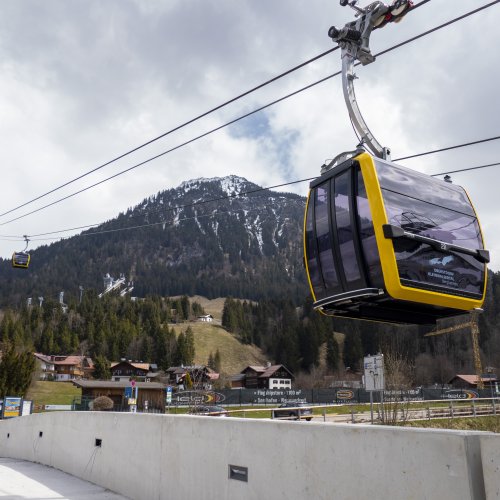
Two-cable system vs. single-cable gondola lift
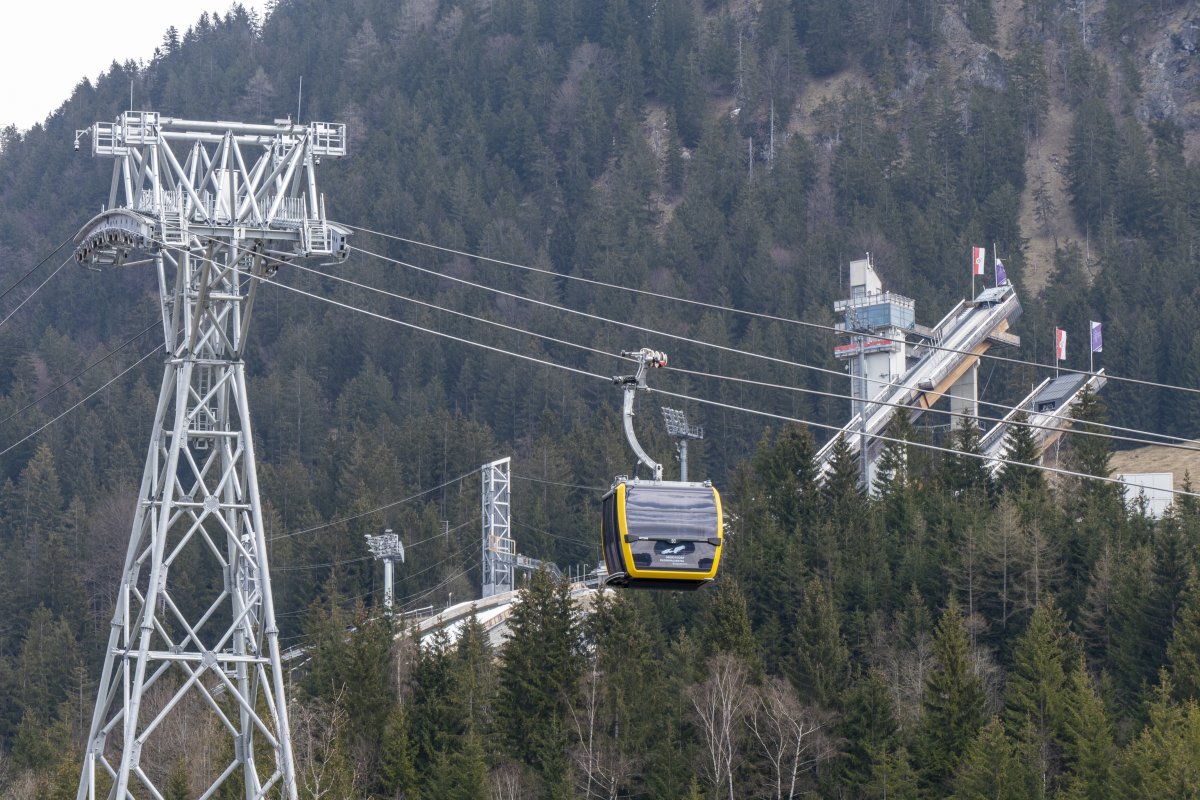
A two-cable system generally requires significantly less energy than a single-cable gondola lift. In a two-cable system and a 3S gondola lift, the frictional force results primarily from the rolling resistance of the carriages on the support ropes.
In addition, for comparable system sizes, the traction rope of a two-cable system or a 3S gondola lift is lighter than the haul rope of a single-cable gondola lift or a single-cable gondola lift. The frictional force, which is relevant for the circumferential force and thus for energy consumption, will be approximately two to three times greater in a single-cable gondola lift than in a comparable two-cable system. Furthermore, the rope of a two-cable gondola lift runs more smoothly and is therefore quieter than a single-cable gondola lift.
For all technology freaks
The direct drive operates with permanently excited synchronous motors. A 250 kW asynchronous motor with 97% efficiency saves approximately 200,000 kWh of electricity over 20 years with 2,500 operating hours per year compared to a DC motor with 92% efficiency. Maintenance is limited to lubrication of the motor bearings. This also eliminates the need for gears, gear oil, and energy loss due to torque conversion.
Structural advantages of the cable car and buildings
The number of towers required is significantly lower for a bicable gondola lift than for a monocable gondola lift. Only a third of the towers are needed, thus requiring less structural intervention in the natural environment! The stations are inclined to reduce energy consumption during acceleration and deceleration of the vehicles. This also allows for shorter stations.
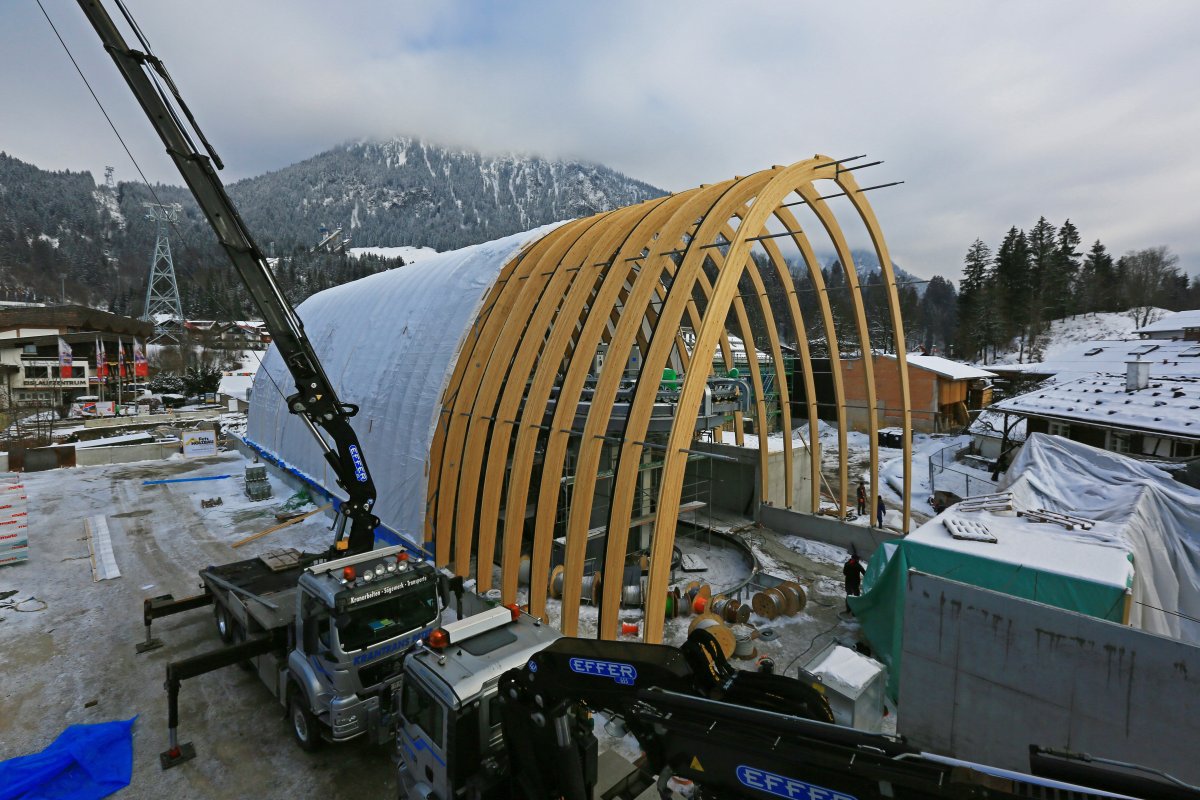
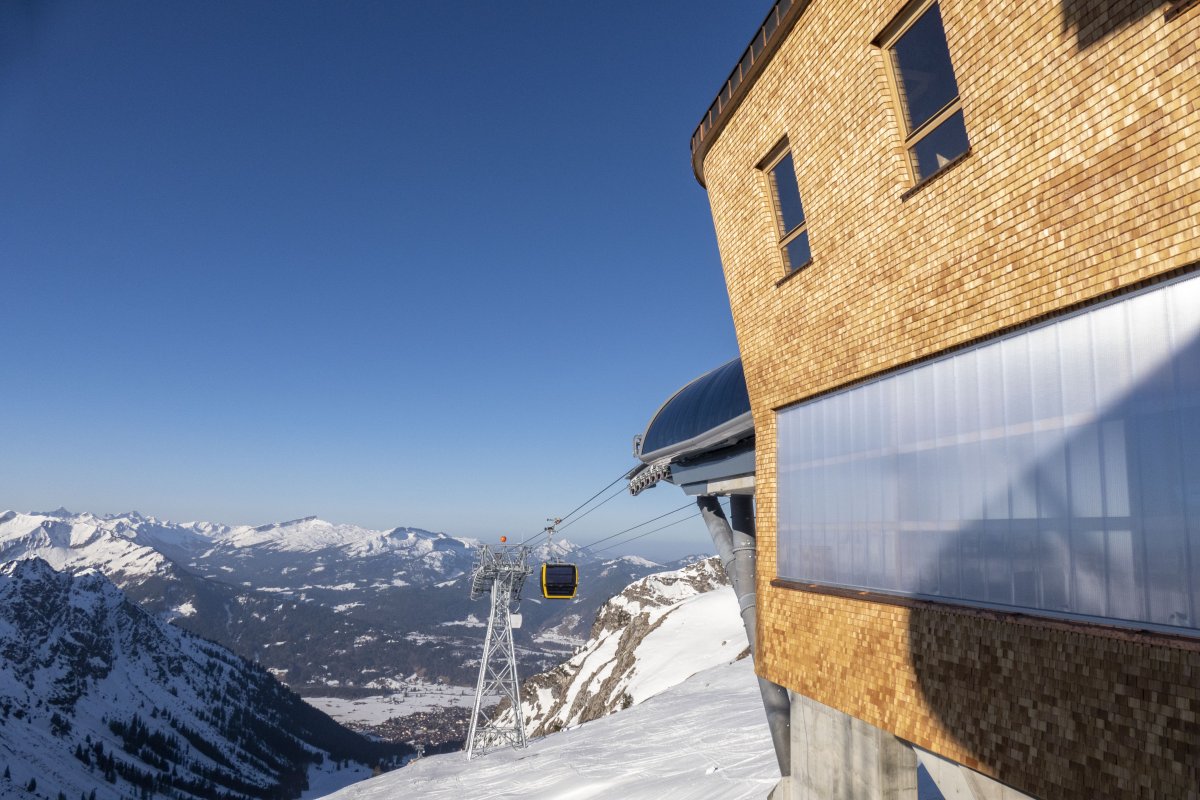
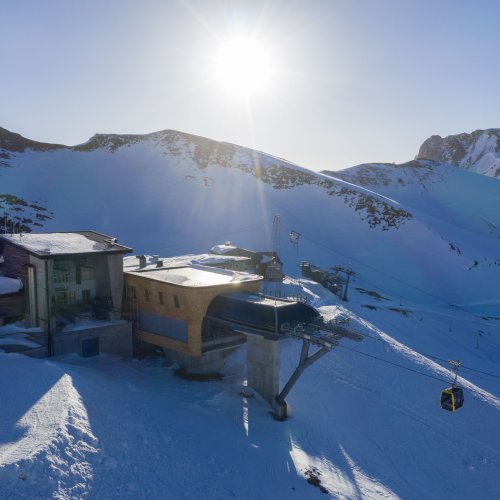
The use of natural resources in the construction of the buildings and stations of the new Nebelhornbahn was a given for us. Thanks to the modern timber construction, the buildings blend naturally into their surroundings.
The station halls are equipped with a groundwater pump that supplies the groundwater to the heating systems of all buildings in the valley. The water heat pump uses the high temperature of the groundwater to heat the service center and administration building in the valley.
The station halls have also been covered with transparent panels to allow more daylight into the stations, thus requiring less electricity for lighting.