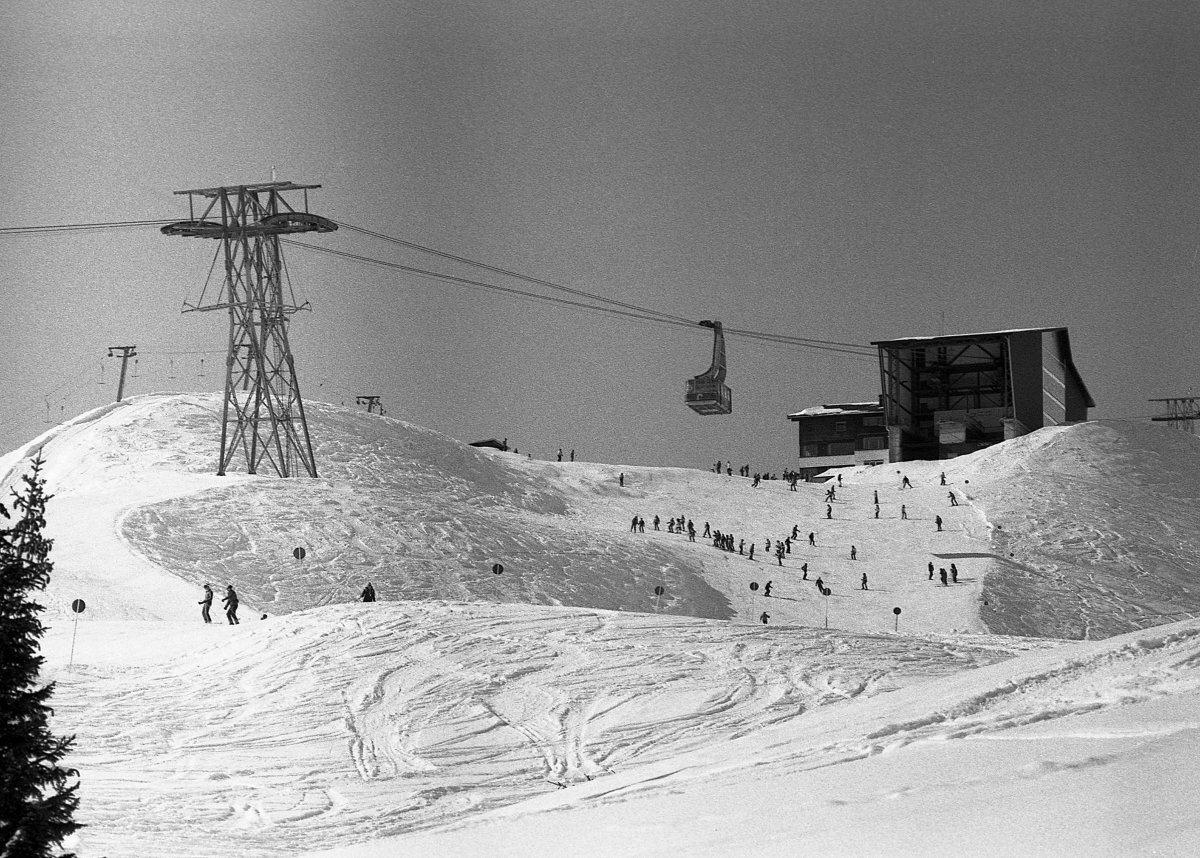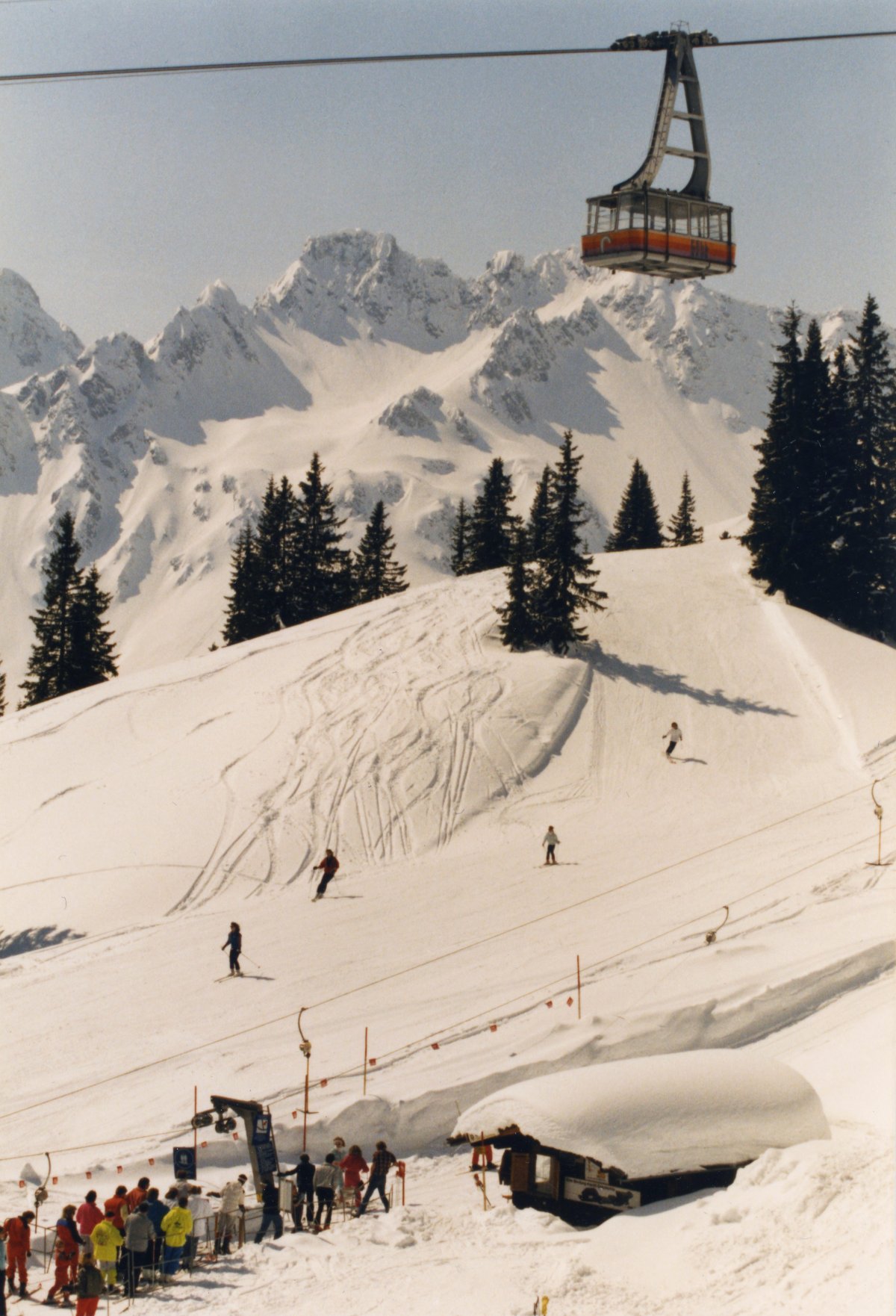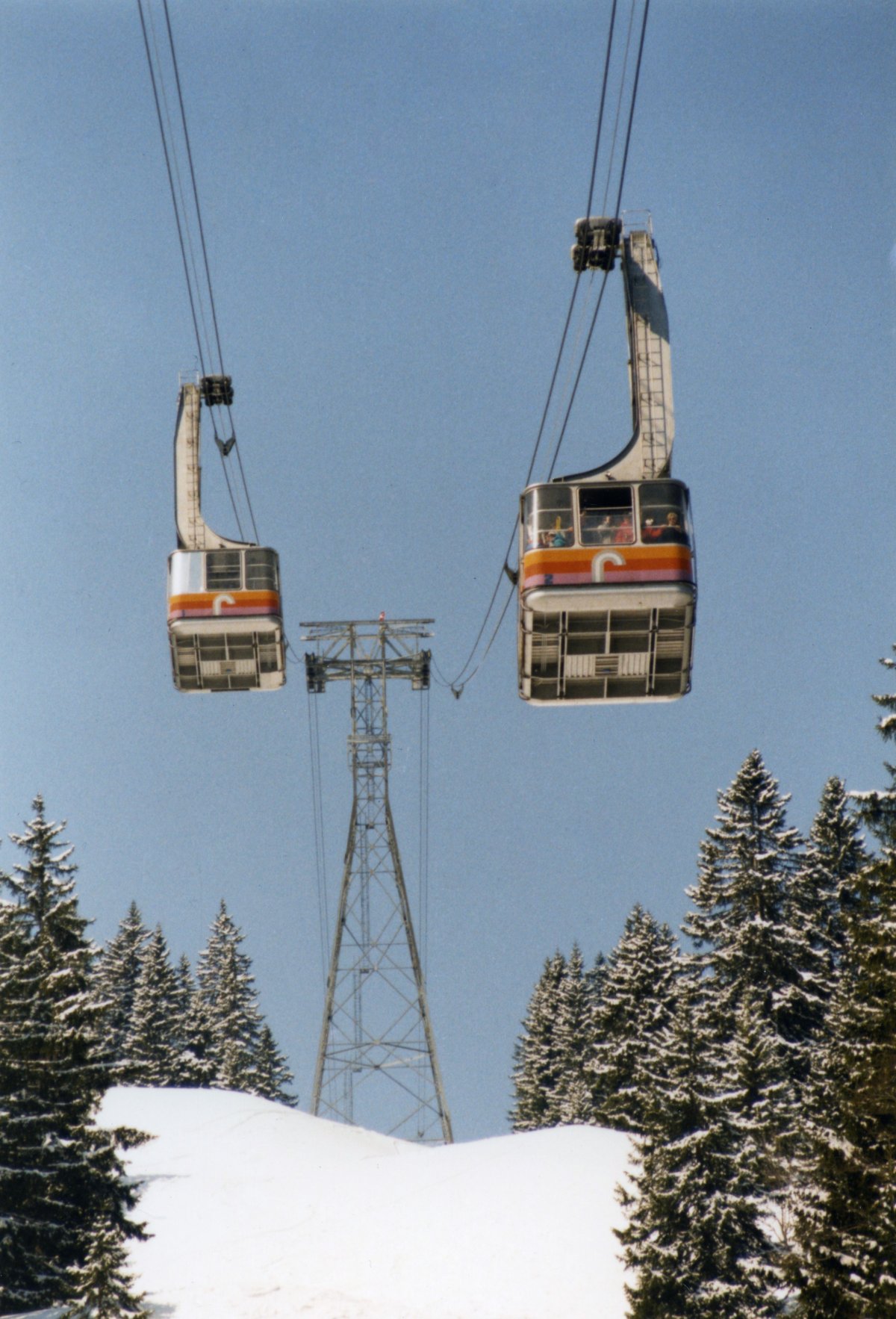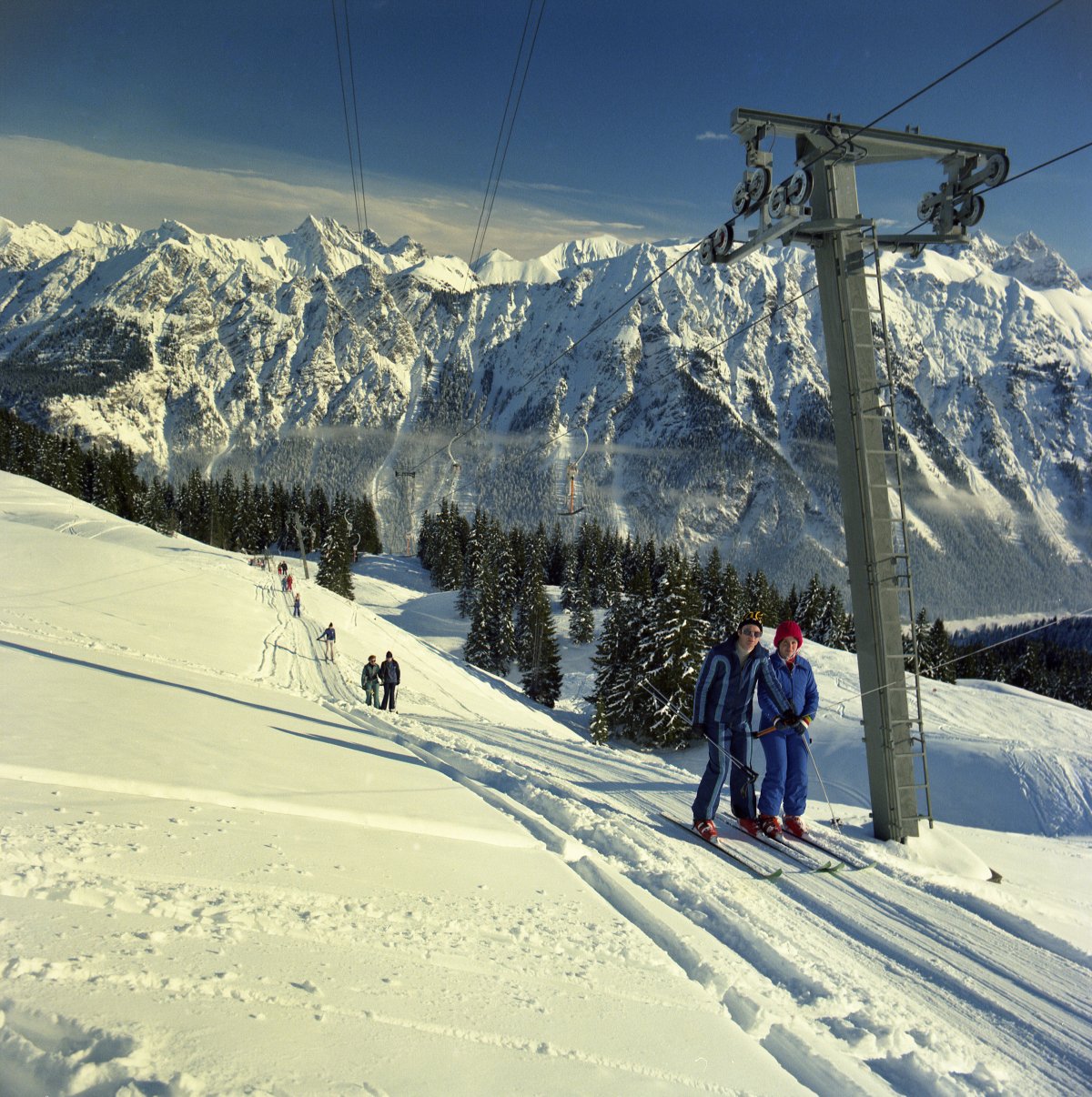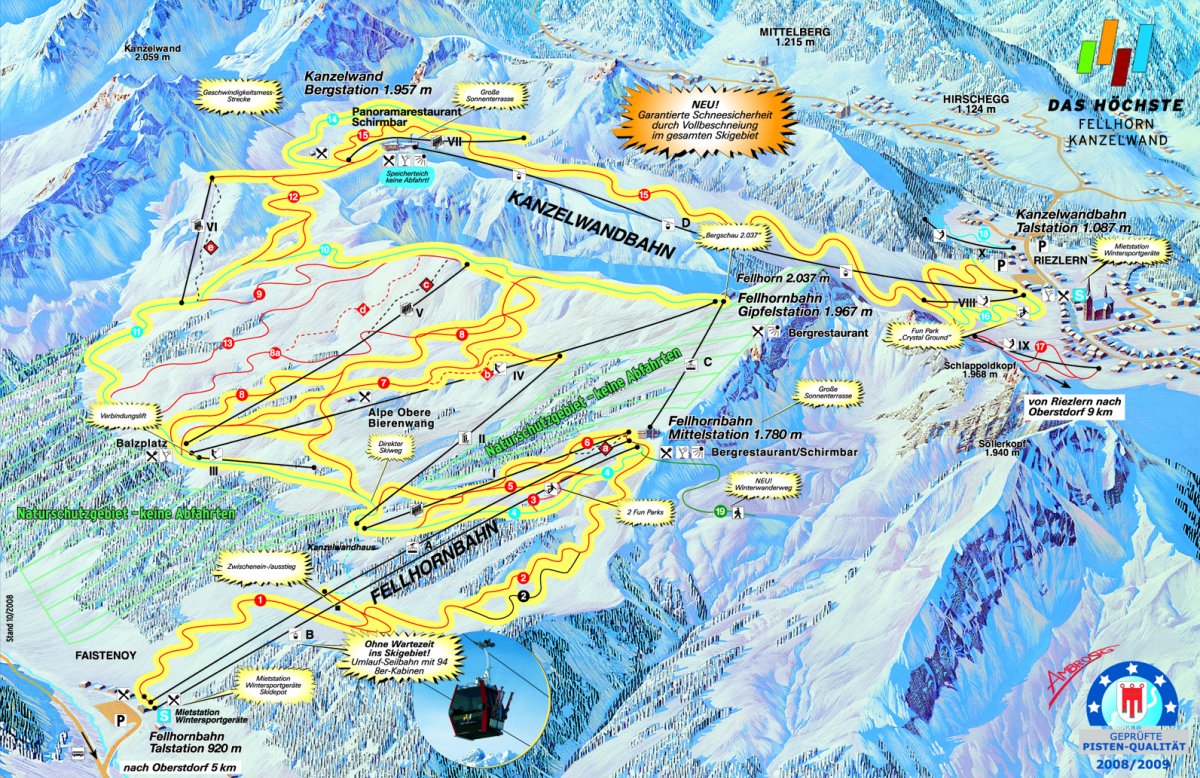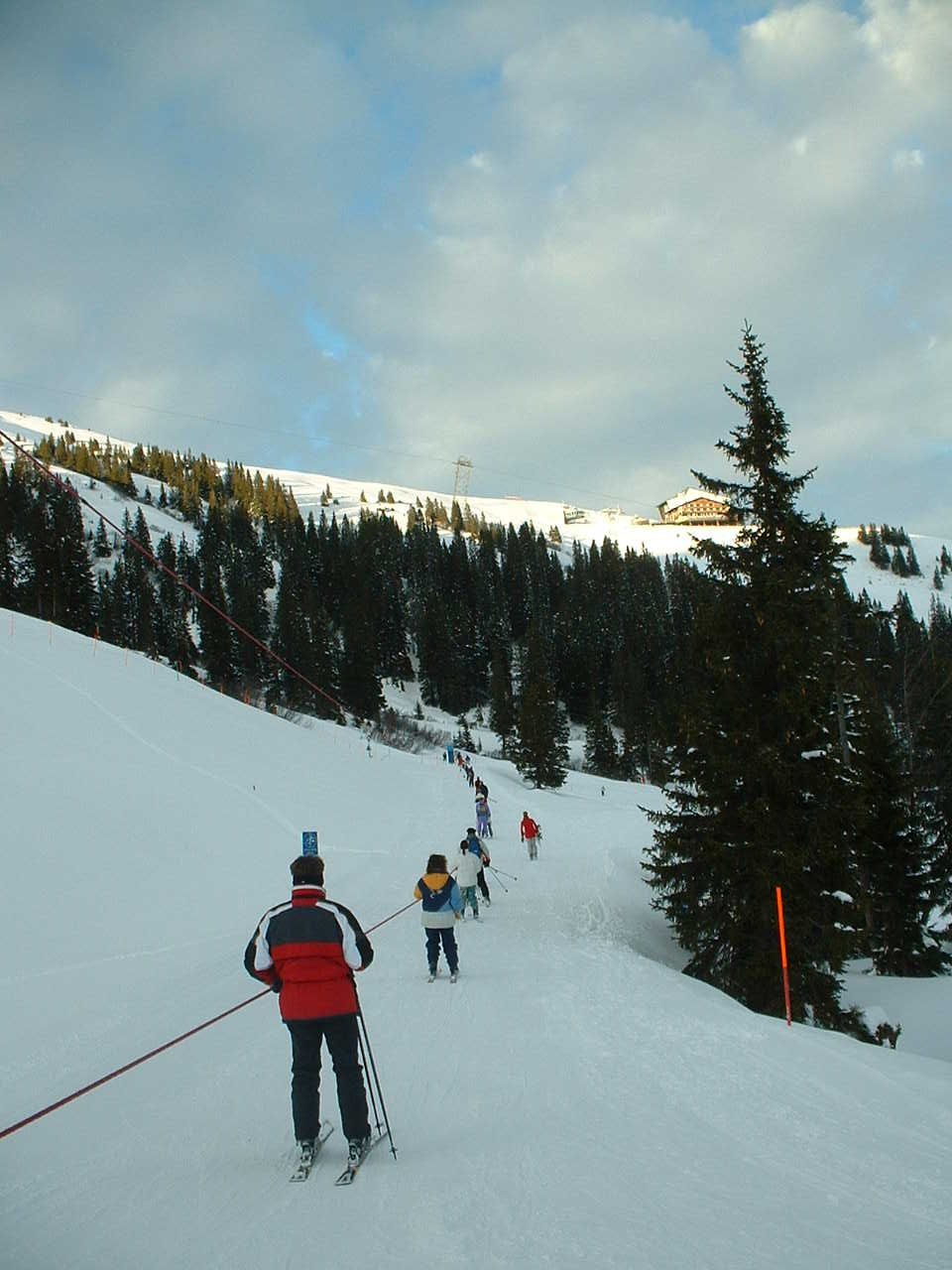
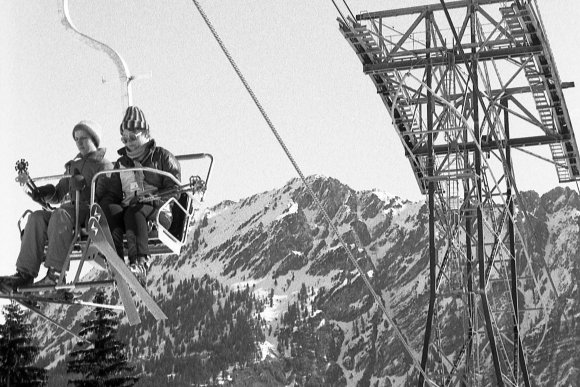
The neighbors from Kleinwalsertal were already there – with the Kanzelwandbahn and the Bierenwanglift. Since then, the offerings on this superlative mountain – the Fellhorn is considered one of Germany's most attractive alpine flower and ski resorts – have been continuously expanded. Milestones included the construction of the double chairlift from the valley in 1981, an additional T-bar lift, and the installation of a snowmaking system in the winter of 1986/87. The construction of the Scheidtobellift represented a further step towards improved comfort and environmental protection in the ski area.
The Fellhorn cable car was ideally equipped for the new millennium: the six-seater "Möserbahn" chairlift replaced two T-bar lifts, and the expansion of the snowmaking system further increased snow reliability.
1970 | Planning and project development phase and founding of Fellhornbahn GmbH in April |
1971 | Groundbreaking ceremony and setup of the construction site |
1972|Construction of Section 1 and the ski lifts: Kuchenbach (Lift 1), Seecklift (Lift 2), Fellhornlift (Lift 3) and Höflelift (Lift 5)|
1973|Start of the first winter season on March 6th at 10:00 AM. Construction of Section 2 and the restaurant building at the Schlappoldsee station, as well as the Wanklift (Lift 4), during the summer.|
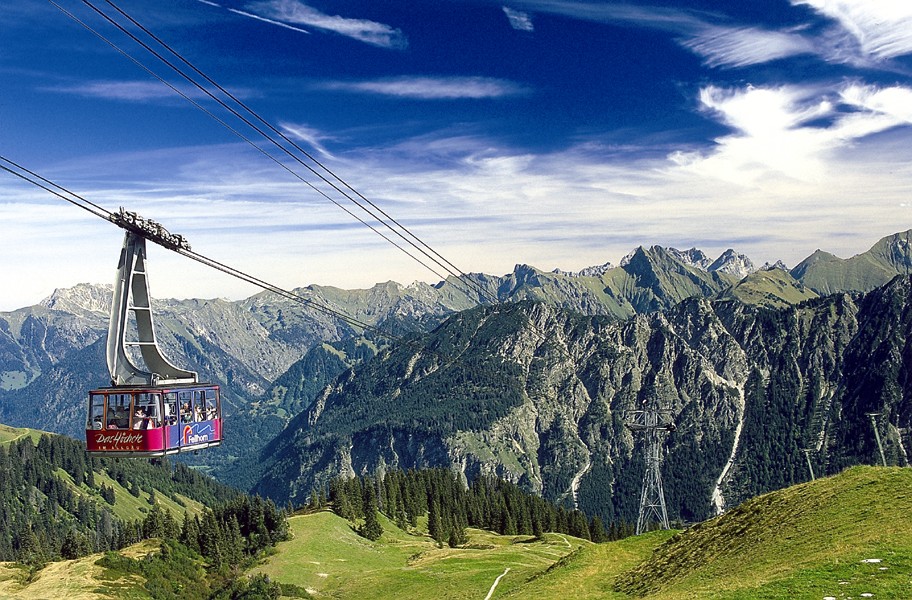
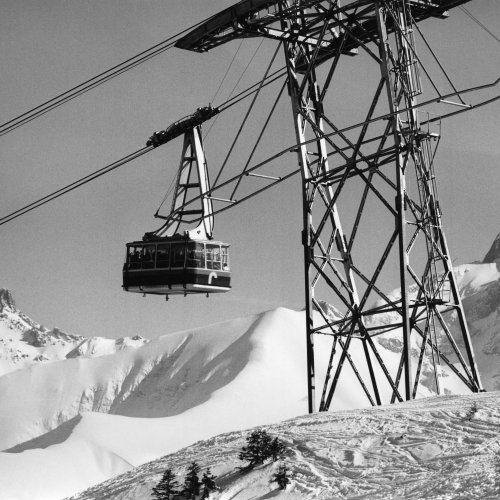
1974|Inauguration of the Fellhorn cable car on February 15th and construction of the terrace at the summit station during the summer.|
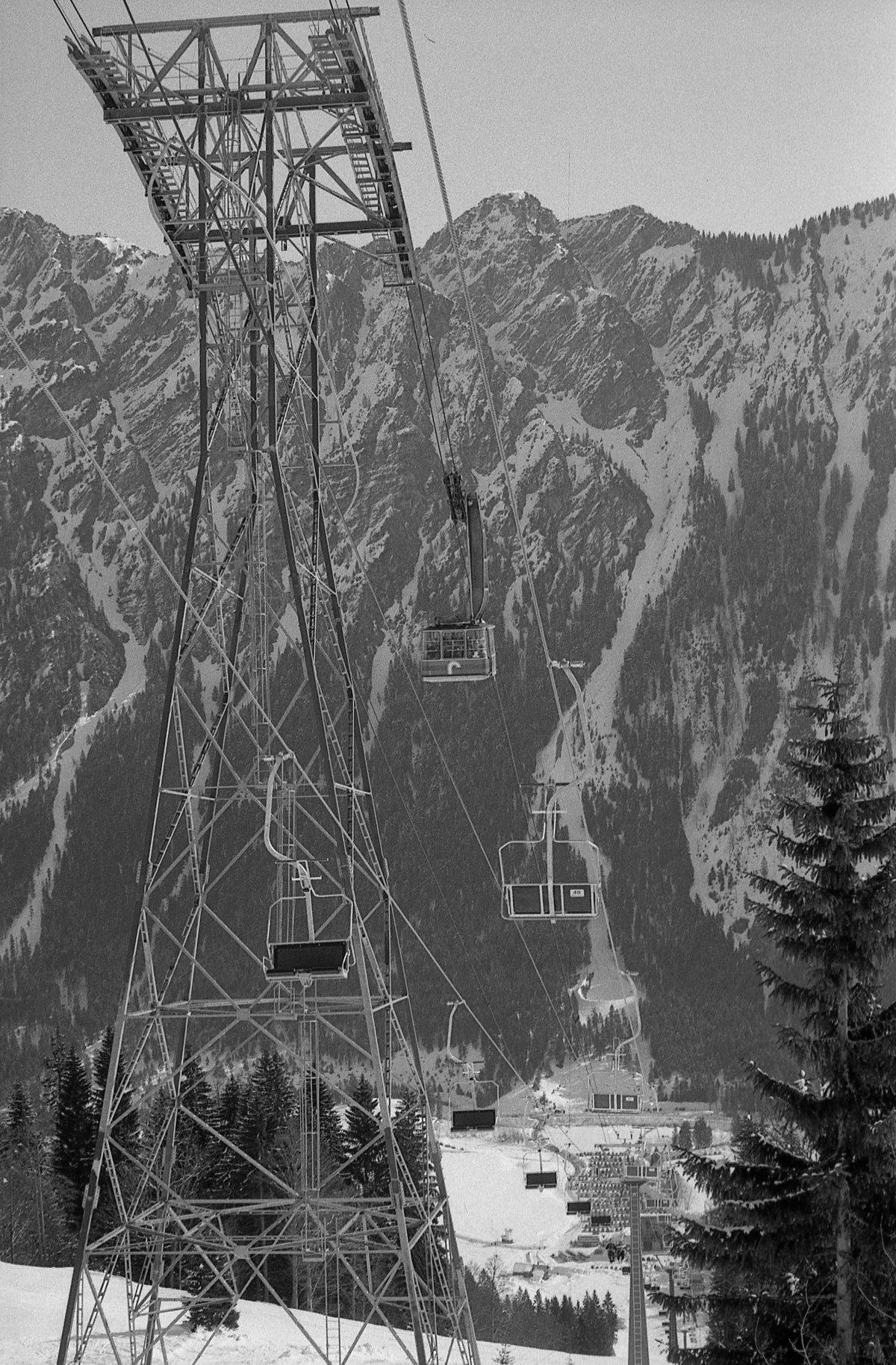
1981|Construction of the Faistenoy double chairlift (DSB 1)|
1986|Construction of the snowmaking system for the valley run|
1987|Construction of Lift 3A|
1989|Conversion of the control system for Section 2 (BBC/STG)|
|_. 1995|Construction of the Scheidtobel DSB|
| 1998 | Wastewater canal, empty conduits, partial snowmaking, and the 20 kV high-voltage line from the valley to the mid-station via the Kanzelwandhaus |
|---|
| 1999 | Expansion of snowmaking, 20 kV grid expansion, wastewater canal, and construction of the Möserbahn, dismantling of lift 3A |
|---|
| 2000 | A natural history information center, the "Bergschau 2037," is built at the summit station. The project is funded by the European Union, the Allianz Environmental Foundation, and the German Federal Environmental Foundation. |
|---|
| 2001 | The new "Zweiländerbahn," a fixed-grip four-seater chairlift, is built and officially opened on January 14, 2002. |
|---|
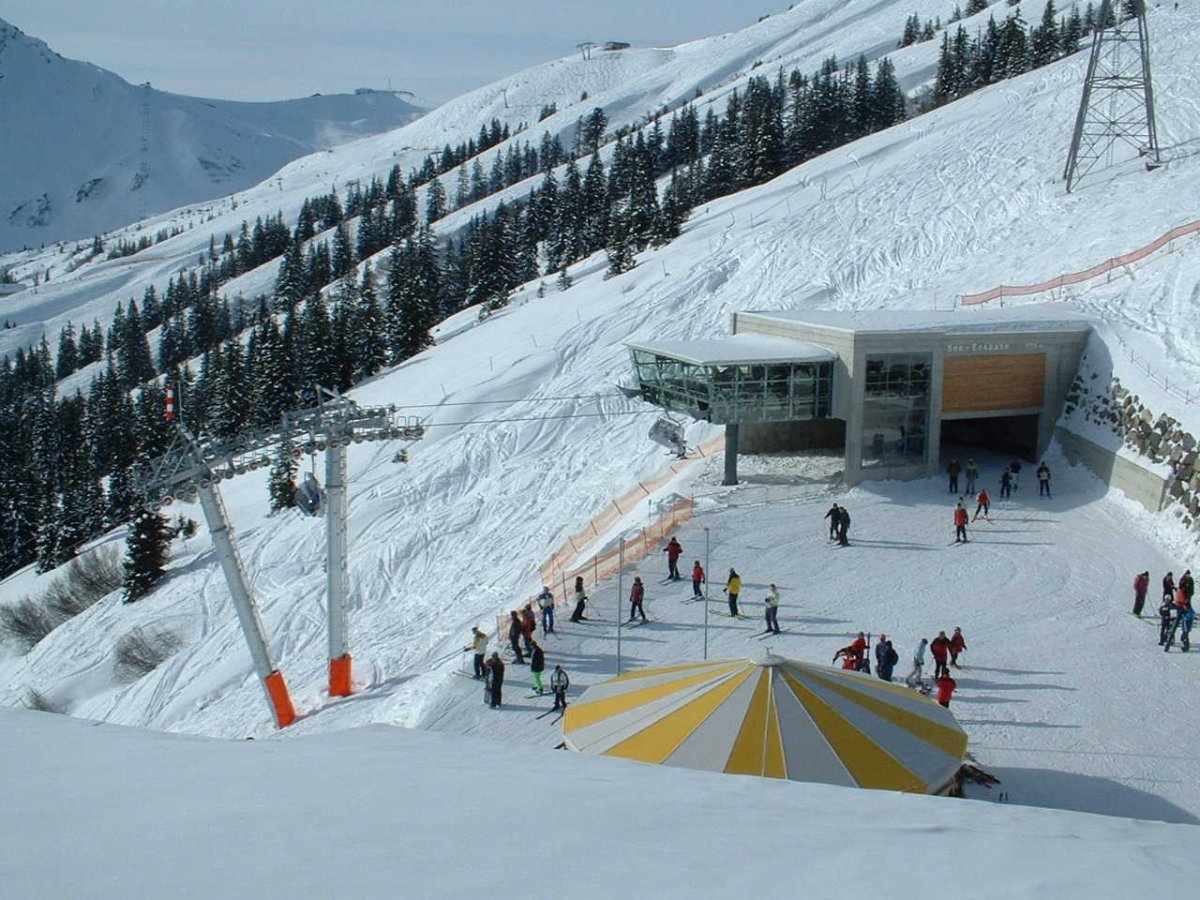
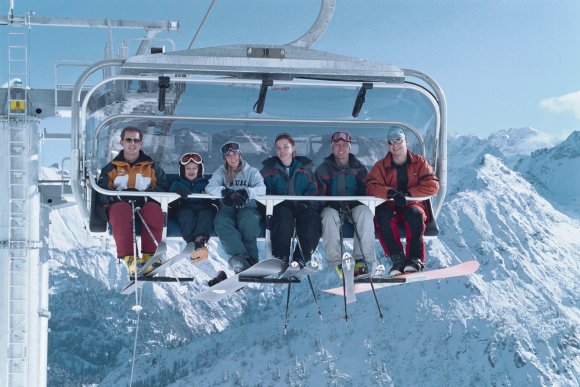
| 2002 | Replacement of the See-Eck and Kuchenbach drag lifts by the new "See-Eck" six-seater chairlift. The world's first six-seater chairlift with weather protection hoods from Leitner, featuring station garages. The first lift in Germany with a 90-degree corner entry and exit. |
|---|
2003|Expansion of the snowmaking systems on the Möser and Stieral slopes.
Construction of a new ski run from the "back" to the "front" ski area. A great relief for children and snowboarders. The haul trail and pushing sections are a thing of the past.
The sun terrace at the mid-station restaurant was significantly enlarged and completely refurnished with comfortable terrace furniture.|
2004|* A "return lift" (Swisscord) was put into operation from the Möser lift towards the new ski run described above.
- Renovation of the Fellhorn summit station. Complete redesign of the restaurant. Also new is the covered cabin exit area with the "Rock Hall" |
2005 | New nature and flower trail from the Fellhorn summit station via the Bierenwangalpe to the Schlappoldsee station. Informative "steles" provide information about the mountain environment |
2006 | Dismantling of the Faistenoy double chairlift and the Höfle T-bar lift. Construction of Germany's longest and most modern single-cable gondola lift with 94 cabins.
Commissioning at the start of the 2006/07 ski season |
2008 | Expansion of the snowmaking facilities |
2009 | Expansion of the parking lot |
2013 | Construction of the new funslope for the first time |
2014 | Construction of the photovoltaic system at the Fellhorn mid-station |
| 2014/2015 | Widing of bottlenecks in the Fellhorn valley run area |
|---|
| 2015 | Reconstruction of the Fellhorn mid-station waiting hall |
|---|
| 2016 | The last T-bar lift in the area is dismantled and replaced by the new 6-seater "Bierenwangbahn" chairlift |
|---|
| 2018 | Construction of a family run from KWH to Schlappold Höfle; acquisition of the "Fellhornstuben" restaurant and grounds |
|---|
| 2019 | Summer conversion of the "Talschau" restaurant into the NTC ski depot |
|---|
| 2024 | Upgrading of Fellhorn cable car section 1 |
|---|
| 2025 | The upgraded Fellhorn cable car I is back in summer operation / Technical and visual refurbishment of the Möserbahn cable car during the summer season |
|---|
| 1970 | Planning for the Fellhorn tourism development project begins. Fellhornbahn AG is founded in April. |
| 1971 | The groundbreaking ceremony marks the start of construction. It's finally underway. |
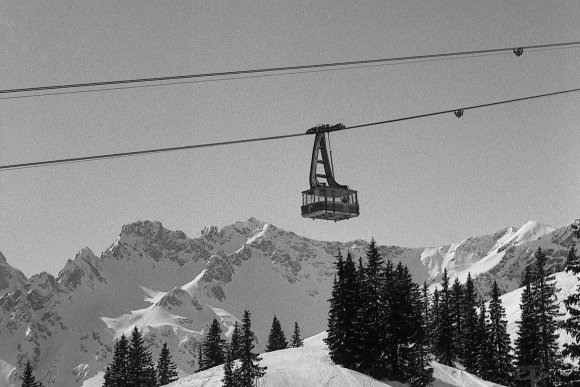
After the first season, construction continues in the summer: Section 2 of the Fellhorn cable car will be added, along with the building for the restaurant at the Schlappoldsee station (mid-station) and Lift 4: the Wanklift drag lift.
| 1974 | The Fellhorn cable car will be officially inaugurated on February 15th. The sun terrace at the summit station will be built during the summer. |
| 1986 | A snowmaking system is built for the valley run to maintain skiing operations even in winters with little snow. |
| 1987 | Lift 3A is built. It runs parallel to the Fellhorn lift (Lift 3) and complements it. |
| 1989 | The first modernization takes place: The control system of the second section is rebuilt using BBC/STG technology. |
| The Scheidtobel double chairlift is built and forms an important main axis for passenger transport on the Fellhorn. | |
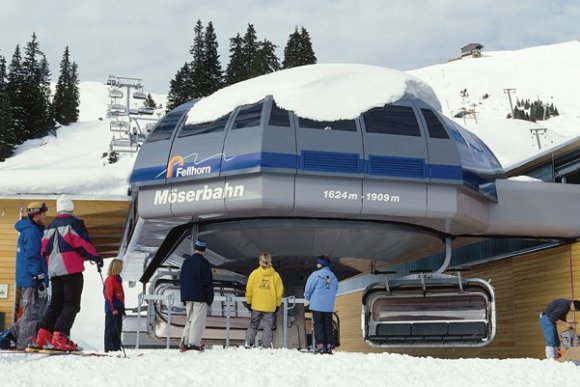
Furthermore, the expansion work from last year will continue. High-voltage cables, snowmaking equipment, and drainage systems will be further expanded.
| 2000 | At the summit station, the Bergschau 2037 is being built – a natural history information center with 200 square meters of interactive exhibition space. Bergschau 2037 is funded by the European Union, the Allianz Environmental Foundation, and the German Federal Environmental Foundation. |
| 2001 | The fixed-grip 4-seater chairlift Zweiländerbahn is being built. It replaces the Bierenwang lift, which previously served as a drag lift connecting the German and Austrian sides of the ski area. |
On January 14th, the two-country lift, built last year, will be officially opened.
| 2003 | The snowmaking systems on the Möser and Stieral slopes are being expanded – for even greater snow reliability. A new ski run is being built for greater comfort and fewer sections requiring skiers to push their way from the "back" (everything between the Scheidtobel lift and Kanzelwand) to the "front" ski area. This will be a great relief, especially for children and snowboarders. In addition, the sun terrace of the restaurant at the mid-station (Schlappoldsee) is being significantly enlarged and furnished with comfortable, new furniture. |
| 2004 | A Swisscord retrieval lift is put into operation from the valley station of the Möserbahn cable car to the new ski run from the previous year. The summit station of the Fellhorn cable car is being rebuilt, and the restaurant is being redesigned as part of this project. The exit from the cable car is now covered and leads into an impressive rock hall. |
| 2005 | Summer is becoming more of a focus: A new nature and flower trail leads from the summit station on the Fellhorn via the Bierenwangalpe alpine pasture to the middle station. Informative steles along the way provide information about the mountain environment. |
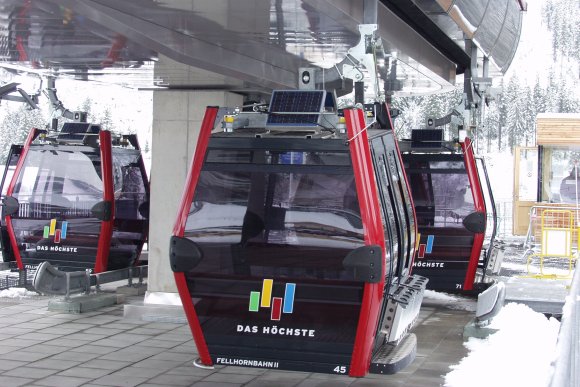
They will be replaced by Germany's most modern single-cable gondola lift, the "Fellhornbahn II," with a total of 94 eight-person cabins and a capacity of 2,400 people per hour. It features an intermediate station at Höfle, allowing passengers to board and disembark there. The new lift will begin operation at the start of the 2006/2007 winter season.
| 2008 | The snowmaking facilities are expanded again. |
| 2009 | The parking lot is enlarged to accommodate more guests. |
| 2013 | The Funslope at Fellhorn is built for the first time and thus launched. |
| A photovoltaic system is being installed at the Fellhorn cable car's mid-station to take a step towards sustainability. Furthermore, some bottlenecks on the valley run will be widened this year and next. | |
| The waiting hall for the gondola lift at the mid-station is being renovated. |
The last T-bar lift in the Fellhorn ski area is being decommissioned. It will be replaced by the Bierenwangbahn, another 6-seater chairlift with weather protection hoods and an energy-saving drive system. Unlike the previous T-bar lift, the top station is no longer at the summit, but slightly above the top station of the Scheidtobelbahn. The new capacity is 2,400 people per hour.
| 2018 | The family ski run from the Kanzelwandhaus to the Höfle intermediate station is being built. In addition, the Fellhornstuben restaurant in the valley, including the surrounding land, is being acquired. |
| 2019 | The existing valley viewpoint in the valley station building is being converted into the NTC ski depot. |
| 2024 | As the first step in the modernization of the Fellhorn cable car I, the gearbox is undergoing a comprehensive overhaul. |
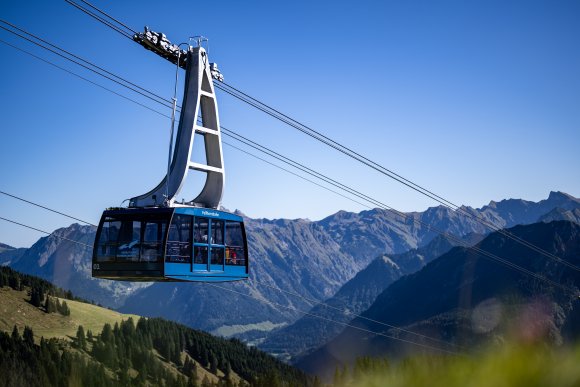
At the same time, work is taking place on the Möserbahn cable car. It is also receiving technical updates and a visual facelift. It will be back in service at the start of the 2025/2026 winter season.
The history of the Fellhorn in pictures