Registriere Dich oder melde Dich im MyMountainClub an, um Deine Meinung zu diesem Thema abzugeben.
zum Login/RegistrierungThe Pure Power of Water
The OBERSTDORF · KLEINWALSERTAL BERGBAHNEN know: Sustainable use of resources pays off. The hydroelectric power plant at the Nebelhornbahn mid-station generates approximately as much electricity annually as the cable car consumes annually. What's effective here is not the quantity, but the height at which the water flows through the power plant. The high speed means more turbine rotations and therefore more energy. An environmentally friendly bonus: The electricity generated is absolutely CO2 neutral. From 2014 to 2017, for example, the hydroelectric power plant saved 3,390 tons of CO2. Committed to preserving nature, the OBERSTDORF · KLEINWALSERTAL BERGBAHNEN has set a goal of saving a further 3,430 tons of CO2 by 2020.
Culinary Delights Thanks to Sunshine
Germany is already considered a green energy nation. On the Austrian side, Vorarlberg has been the leader in photovoltaic systems since 2019. It's no wonder, then, that the power of the sun is increasingly gaining ground in the borderless two-country region of Oberstdorf/Kleinwalsertal: The photovoltaic systems on the Fellhorn supply renewable energy to the cable cars and restaurants on both mountains. On the Walmendingerhorn, the solar thermal system saves around one-third of the heating oil consumption.
On the sunny side of the two-country region
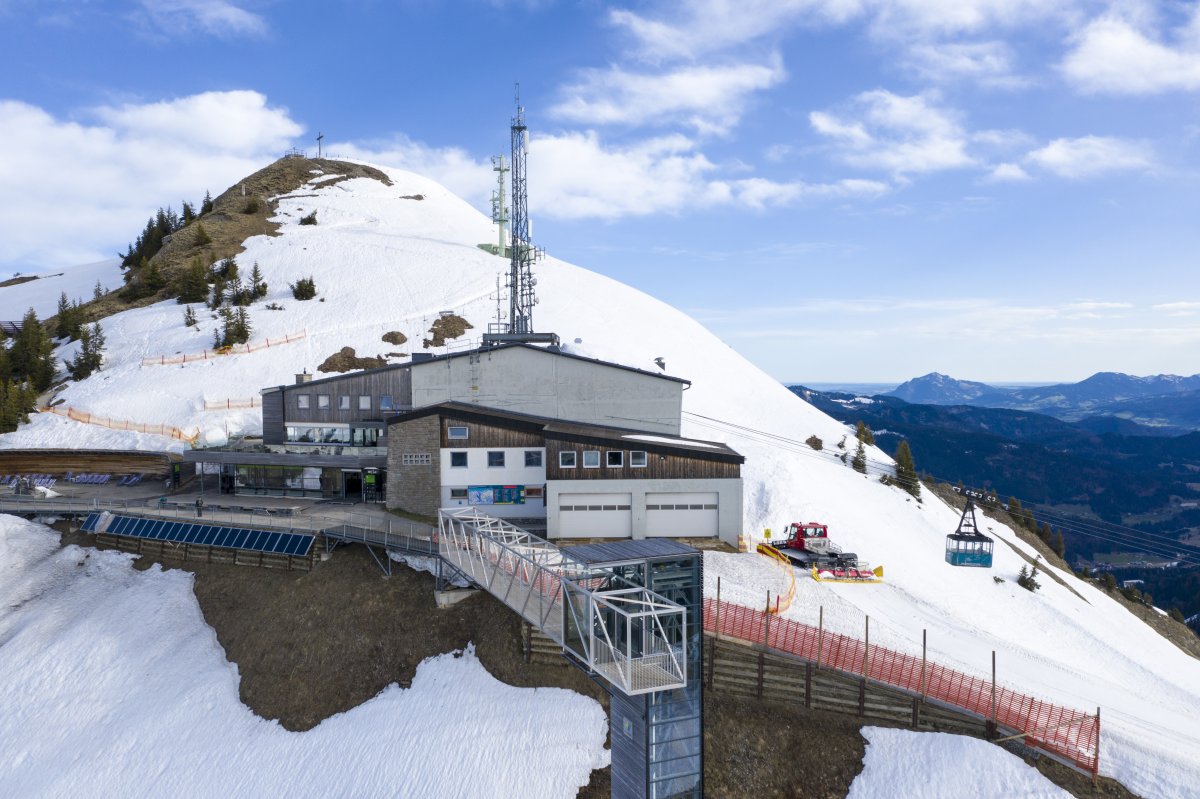
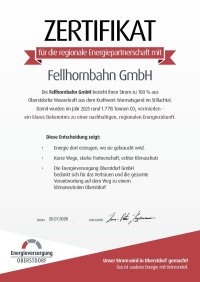
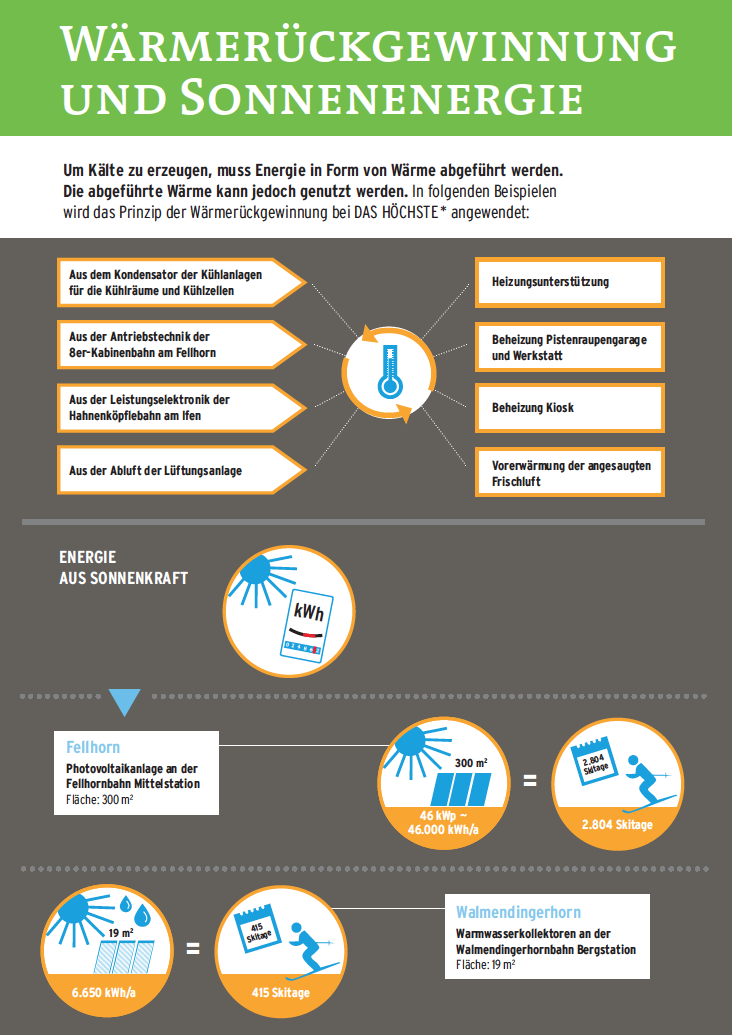
With photovoltaic systems on the local mountains, the OBERSTDORF · KLEINWALSERTAL BERGBAHNEN generate enough solar energy to supply the respective mountain stations with 100% green electricity. The 300-square-meter solar system at the Fellhornbahn mid-station generated around 38,951 kWh in 2017. By comparison, a four-person household consumes an average of approximately 4,000 kWh per year. The photovoltaic system on the Walmendingerhorn is also energy-efficient. Here, a 24-square-meter system converts solar energy into usable electricity in an environmentally friendly way. OBERSTDORF · KLEINWALSERTAL BERGBAHNEN attaches great importance to renewable energies, which is why the generated electricity flows directly back into the mountain station. By switching to green electricity, the two-country region saves around 2,542.4 tons of CO2 annually – roughly the equivalent of a forest the size of 276 football fields.
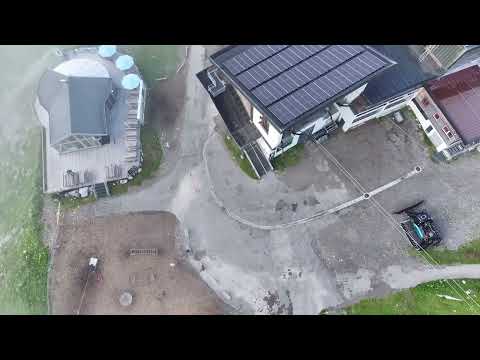
With two PV systems at the Höfatsblick station of the Nebelhornbahn, we are taking another step toward active environmental protection. The solar modules on the roof and on the side of the cable car together generate around 52,000 kWh of electricity per year, equivalent to the average annual consumption of about 14 households. Or, to put it more clearly: around 520,000 cell phone charges or over 260,000 cups of coffee. The electricity generated is used directly on-site for railway operations and our technical systems. This not only reduces CO₂ emissions, but also harnesses the energy where it is generated: in the heart of the mountains.
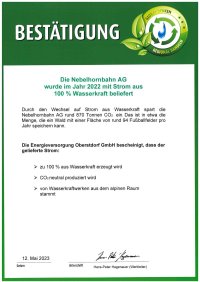
In addition to using green electricity from solar power, the Nebelhornbahn has its own hydroelectric power plant that supplies green electricity.
x
At Oberstdorf Kleinwalsertal Bergbahnen, active environmental protection is a top priority!
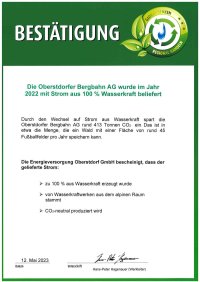
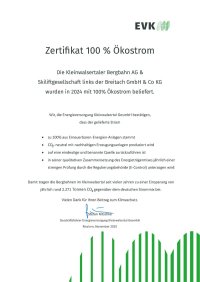
At the Oberstdorf Kleinwalsertal cable cars, everything from the coffee machine to the snow gun is powered by 100% green electricity from hydropower. This saves 343 tons of CO2 per year at the Söllereck, for example. This is roughly equivalent to the amount that a forest the size of 36.96 football fields can store per year. At the Kleinwalsertal cable cars, the figure is 2,542.4 tons of CO2, which is roughly equivalent to the amount that a forest the size of 276 football fields can store per year.
Green electricity certificates from Oberstdorf Kleinwalsertal Bergbahnen
Graphics on heat recovery, solar energy & hydropower
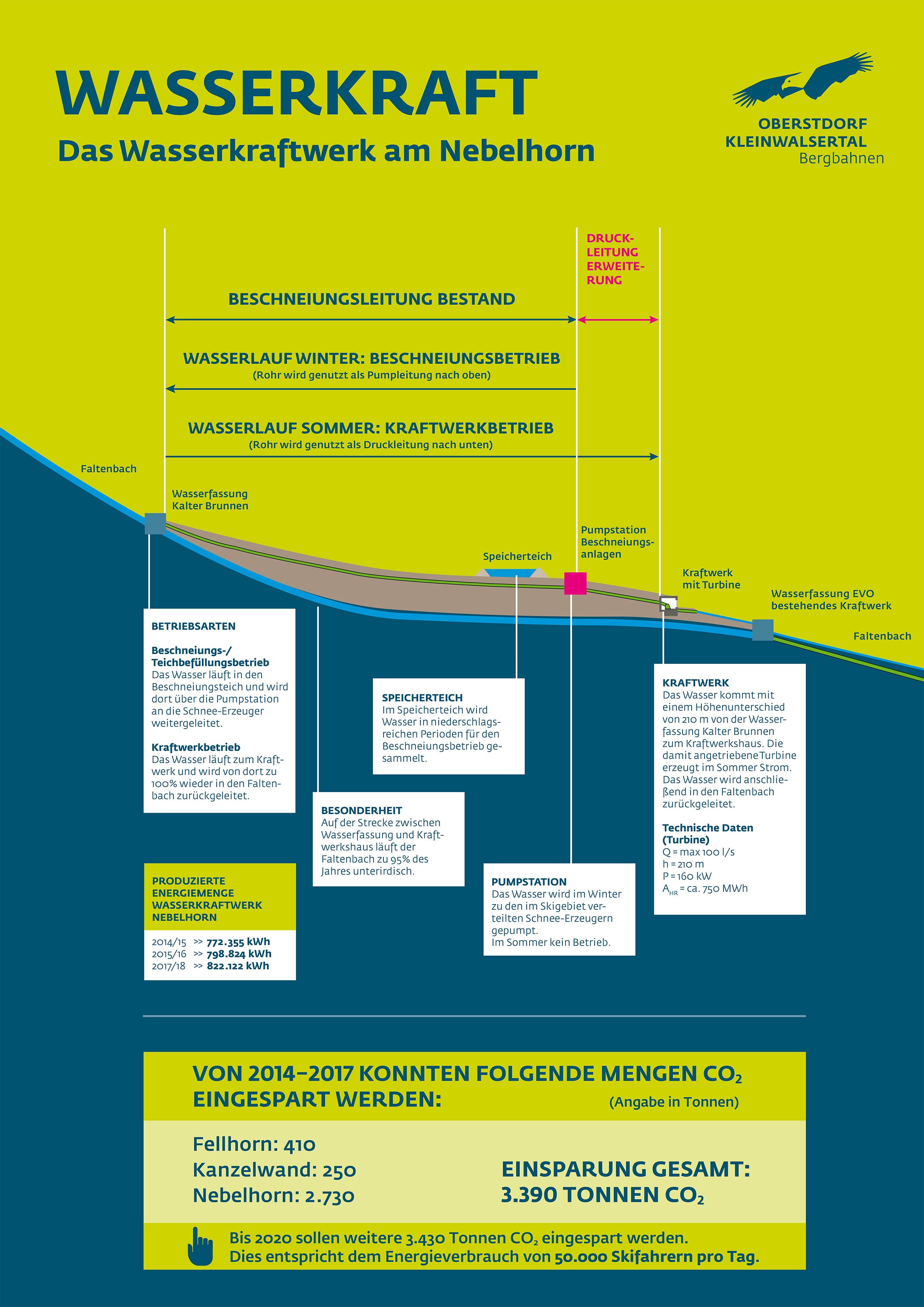
Das Wasserkraftwerk am Nebelhorn
Infografik zeigt die Wasserkraftwerke in Nebelhorn und deren Funktionsweise zu unterschiedlichen Jahreszeiten.